
What to prepare with ube powder ?
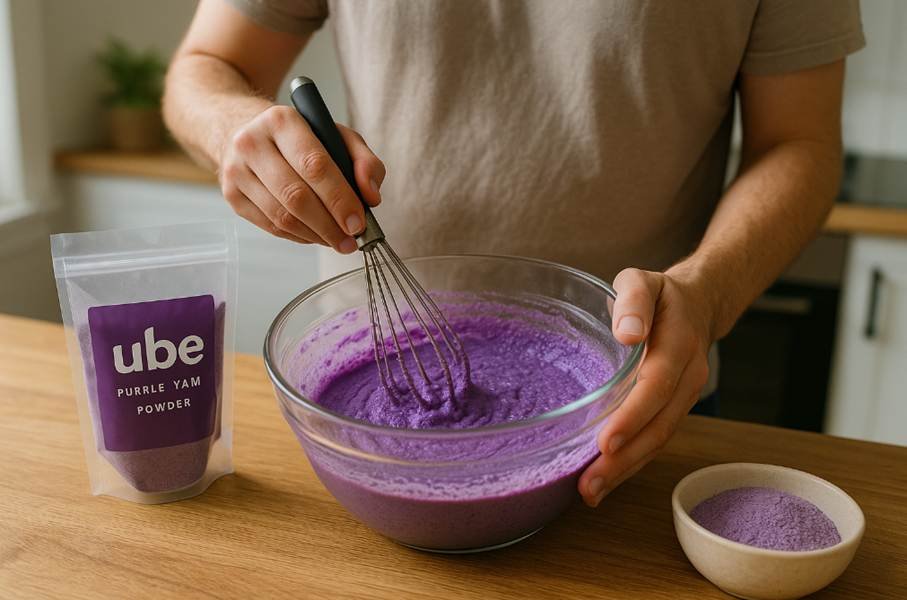
Whether you’ve just discovered ube or you’ve seen it turn everything from donuts to ice cream a striking shade of purple, this Filipino treasure is more than just a pretty ingredient. Ube powder the dehydrated form of purple yam is your gateway to delicious, colorful, and culturally rich recipes. From soft cakes to vibrant lattes, learning how to work with ube powder opens the door to an entire palette of textures and tastes. This article will show you how to use it properly, what you can create with it, and how it can become a star ingredient in your kitchen.
How to use ube powder in the kitchen
Rehydrating and cooking with ube powder is the first step to unlocking its full flavor. Most people don’t realize that ube powder isn’t a ready-to-eat flour it’s a concentrated form of dried purple yam that needs to be brought back to life with water or milk. To rehydrate ube powder, combine it with hot water in a 1:1 ratio, stirring until it forms a smooth and thick paste. Let it rest for 10-15 minutes. This creates a rich base that can be incorporated into various recipes. Some prefer to add a dash of coconut milk to give it extra creaminess and flavor depth, which matches beautifully with sweet dishes. It’s essential to use high-quality ube powder, which retains its natural sweetness and vibrant purple hue without additives. Lower-quality powders often result in dull-colored, bland outcomes, which can ruin the aesthetic and taste of your dish.
A common metaphor used among Filipino cooks is that ube is the “velvet of the root world” not just for its texture but for how elegantly it blends with other flavors like vanilla, coconut, and condensed milk. It doesn’t overpower, but rather enhances. This makes it perfect for fusion recipes as well. Whether you’re planning to bake or cook, the rehydrated ube base is your starting point for everything from cakes to cocktails. Just remember to sweeten it appropriately ube is earthy and mellow on its own, and often benefits from sugar, condensed milk, or sweet syrups depending on your recipe.
Popular desserts you can make with ube powder
Once your powder is rehydrated, a universe of desserts opens up. One of the most iconic treats is the ube halaya a traditional Filipino jam made from purple yam, condensed milk, coconut milk, and butter. It’s dense, sweet, and often served chilled or used as a filling for bread and pastries. But ube powder is also the secret behind many beloved fusion desserts popping up in modern bakeries:
See also: The Role of Infusion Systems in Modern Healthcare
Ube cake and cupcakes
Soft, moist, and eye-catching, ube cakes are a staple in Filipino celebrations. To make one, you typically mix rehydrated ube with flour, baking powder, sugar, eggs, and a creamy element like evaporated milk or coconut milk. A popular twist is adding macapuno (a type of sweet coconut) on top for extra chewiness. Ube cupcakes follow a similar formula and are often topped with cream cheese frosting, which balances the yam’s sweetness beautifully.
Ube cookies and brownies
Ube powder can be folded into cookie dough or brownie batter for an unexpected twist. It not only changes the flavor but adds a gorgeous color contrast. Imagine deep purple cookies with white chocolate chips they’re visually striking and delicious :
- ube cheesecake
- ube pancakes
- ube crinkle cookies
- ube swiss roll
- ube flan
- ube sticky rice
Every one of these desserts showcases the earthy yet sweet taste of ube, combined with creamy, chewy, or crunchy textures for a complete sensory experience.
Drinks and smoothies with ube powder
When used correctly, ube powder can transform your drink game entirely. Its mellow flavor and creamy texture make it an ideal ingredient for cold beverages and vibrant lattes.
Ube latte and milk tea
The ube latte has become a café darling and for good reason. To prepare it, mix rehydrated ube with warm milk (dairy or plant-based), add a bit of vanilla syrup, and finish with ice. This drink offers both a caffeine-free alternative and a stunning purple glow that customers love. You can also create a Filipino-inspired ube milk tea by combining rehydrated ube with black tea, tapioca pearls, and milk. Add honey or brown sugar for sweetness and shake well.
Ube smoothies
For those chasing healthier options, try an ube smoothie. Blend ube paste with bananas, oat milk, ice cubes, and a touch of maple syrup. It’s filling, refreshing, and visually gorgeous perfect for a quick breakfast or post-workout treat. Because of its versatility, ube can replace fruits like berries in many smoothie recipes. Its starchy consistency helps give body to the drink, and it pairs well with vanilla, cinnamon, or even cacao.
Can you use ube powder in savory dishes?
While most recipes focus on sweets, ube powder also has its place in savory cooking. Its naturally earthy tone and dense texture can be creatively used in dishes beyond dessert. One option is to blend ube into mashed potatoes, adding both color and a subtle nutty taste. Another idea is crafting purple gnocchi by mixing rehydrated ube with flour and egg, just as you would with sweet potatoes.
In Filipino cuisine, ube is sometimes used in savory pastries, where it’s layered with meats or cheeses in contrast-rich preparations. These fusions create dishes that are as visually appealing as they are flavorful. Though not traditional, chefs in modern kitchens are now adding ube into sauces, dumpling fillings, and even as a coating for fried dishes. The key is balance too much ube and the sweetness becomes overwhelming, but just enough can create a new dimension in classic dishes.
Why ube powder is a kitchen essential
Ube powder is more than a trendy purple ingredient. It’s a versatile, shelf-stable, and culturally rich product that allows for culinary creativity in both traditional and modern recipes. Having it on hand means you can whip up a dessert or smoothie in minutes without peeling, boiling, or mashing fresh yam. It also stores well, making it perfect for occasional bakers or anyone with limited access to fresh ube.
Its deep flavor profile a blend of vanilla, nut, and sweetness pairs beautifully with coconut, milk, caramel, and even coffee. And its vibrant color transforms ordinary dishes into stunning creations that delight the eyes as much as the taste buds. From a fluffy ube pancake breakfast to an evening ube cheesecake dessert, having this ingredient in your pantry opens up endless opportunities to explore both Filipino heritage and modern food trends.
Something to try next time you cook
Ube powder might seem like a simple purple dust at first glance, but in the hands of a curious cook, it becomes a canvas of flavor and color. Whether you’re a home baker or a kitchen experimenter, this ingredient offers a unique journey one that’s rich in culture, creativity, and taste. What will you try making with it next?