Buying One Machined Spare At A Time Is Costing You Shifts
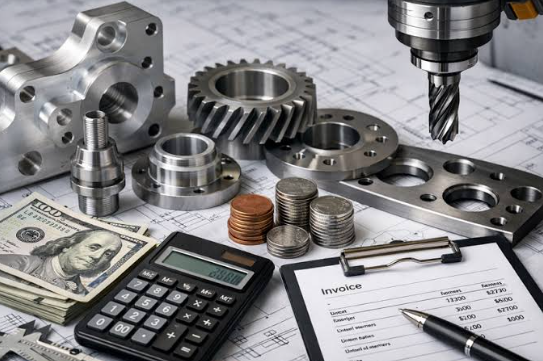
A filler cam is maybe $180 of tool steel and spindle time. Waiting three weeks for that same cam, on a bottling line moving roughly 40,000 cases a month, is a number with four digits in front of the decimal. Plants that stop paying it order their wear parts as a measured batch from one CNC and robotic fabrication partner, so the spare is already sitting on the island when the shaft snaps. Buying one part at a time looks cheaper on every individual invoice and costs more across a year than batching the same parts ever does.
One Cracked Cam Stops An Entire Shift
The broken component is rarely the expensive item. What costs money is the sequence behind it. The line drops mid-shift, the crew strips the filler to get the pieces out, and within the hour somebody has to choose between a real replacement three weeks out and a copy from a welding shop down the road. Meanwhile the bottling schedule keeps its original dates, so the shift you lost on Tuesday gets paid back in overtime on Saturday at a rate nobody budgeted.
Job after job, the same parts turn up on the failure list, and they are almost always the undocumented ones. A conveyor shaft somebody turned down on a manual lathe in the nineties. A cam that arrived bolted into the machine and was never drawn. Nobody has a print, so nobody can order two.
That is not a machining problem. It is a purchasing pattern.
See also: Convenient Nutrition for Busy Lifestyles
Count The Freight Before You Count The Part
Island procurement math runs backwards from the mainland version, where the part is the cost and the truck is a rounding error. Ocean freight is quoted per cubic metre with a minimum billable volume, and one small crate books that minimum just as fast as a full one does. Say the cam quotes at $180 and a matching conveyor shaft at $340. Those quotes barely move whether you order one of each or eight, but the freight line on a single-part shipment can rival the parts themselves, which means the landed cost of a one-off is a multiple of what the shop actually charged you.
You can check the shape of that before committing to anything. The free CBM calculator on SeaRates turns crate dimensions into billable cubic metres in about a minute, and running it twice, once for a single spare and once for a consolidated crate, usually settles the argument on its own. Everything after the first part rides along for very little. That is the whole case for ordering ahead, stated in the one unit that finance already understands.
Air freight is the escape hatch, and it is priced like one. Four days instead of three weeks, at something in the range of five to eight times the ocean rate on a small crate before duties clear. Treat that premium honestly in the annual numbers, because it is not a freight cost at all. It is the price of a decision nobody made in January.
Hand Fitted Copies Never Match The Original
The local welding shop is the other escape hatch, and it works exactly as well as the measurement behind it. A copy fitted by eye to a worn original inherits the wear. It bolts up, it feeds, and it loads the bearing beside it a few thousandths wrong, which is why it fails again inside a month and usually takes a bushing with it. A hand-fitted cam is on borrowed time from the day it goes in.
Repeatability is a miserable thing to sell, because it is invisible on every day it works. Same reason nobody thanks the engineer who specified the right stainless for the wash-down zone, or notices the floor drains slope correctly until the morning they do not. Back to the cam: a shop machining to print and verifying on a programmable coordinate measuring machine produces a part that measures the same in March and in November. That is what makes a spare a spare rather than a project. The fitter does not decide anything, and the part that comes off the shelf behaves like the one it replaced.
Batch Machining Turns Spares Into Interchangeable Stock
Setup is where short-run machining actually spends its money. Programming, fixturing and first-article inspection get paid for once, whether the run is one piece or twenty, so eight cams cut from a single setup land far under the per-part cost of eight separate orders placed across a year. Consolidate the freight on top of that and the gap widens again. A spare that lands before the failure is worth several times the same part bought after it. The arithmetic is dull and it points one direction.
There is a second effect that does not show on any quote. Once the shelf holds two identical shafts instead of one improvised copy, the maintenance conversation changes from what can we fabricate to which drawer is it in. Replacement becomes a task with a known duration. Your crew stops estimating and starts scheduling, which is worth something on a plant where downtime is counted in lost shifts rather than lost minutes.
Order The Steel Before The Line Stops
The case for ordering early does not rest on the price of a cam. Food Industry Executive reported in June 2026 that per-plant downtime costs in food and beverage manufacturing have more than doubled in recent years, reaching roughly $10 million per year, driven by equipment failures and longer recovery times after each stoppage. Most island bottlers sit nowhere near that scale. The direction of the trend still holds, and the recovery half of it is precisely the part a stocked shelf removes.
Start with the wear list rather than the catalogue. Pull the components that have failed twice in the past three years, get them measured and drawn properly, and put the whole group in front of a machining and robotic fabrication shop as one batch with tolerances attached. Order enough to cover a year of failures plus one, ship it in a single container, and label the shelf. The steel was never the expensive part of this. The shift was.