What Parents Get Wrong About Their Kid’s First Real Glasses
It happens by the second Tuesday. It happens to careful kids and careless ones alike. It happens no matter what you paid. A brand new pair comes home scratched, floppy at the hinge, and riding halfway down the nose. Most parents blame the child. The fit is what failed, and a parent hunting prescription glasses Washington DC families can live with is really shopping for a fitting, not a frame.
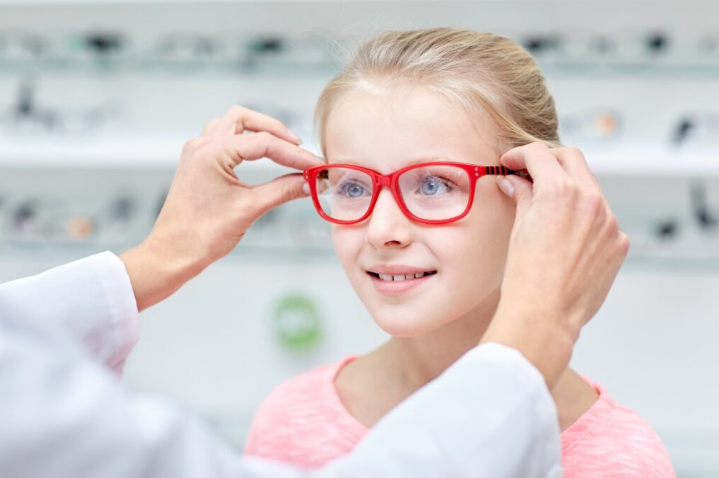
Children’s eyewear is its own trade. The face is still growing and the bridge of the nose is barely formed. A frame built for a small adult will slide on an eight-year-old all day long. A pair that slides gets shoved back up with a thumb on the lens. Then it lands face first on a desk, and a backpack is where glasses go to die.
Kids’ Glasses Are Not Just Small Adult Glasses
Start with the eyes themselves. Nearsightedness is not the uncommon thing it was a generation ago. The National Eye Institute puts the share of nearsighted Americans at 41.6 percent, up from 25 percent in 1971. More children need correction, and they need it earlier. A seven-year-old head is narrow at the temples and short from ear to eye. The nose has almost no shelf yet to carry weight. Give that child adult proportions and the lenses ride low, so the optical centers sit above the pupils. Nine times out of ten what turns up at the counter is a frame that never sat where it was measured.
Fit gets measured, not eyeballed. Pupillary distance on a child is a small number, and a small error there walks the optical center off the eye. Temple length and bridge width get set in person, then reset a few months later because the kid grew. The adjustment matters more than the model stamped on the temple.
See also: Convenient Nutrition for Busy Lifestyles
The Myth That Any Frame Will Do
The myth is that a frame is a frame and price is the only real variable. A parent came in during back-to-school week with a third grader from a DC public school. His two-week-old glasses had already lost a screw and picked up a scratch across the right lens. They were an adult small, ordered online from a photo of his face. Type prescription glasses Washington DC into a phone at nine at night and you get a wall of storefronts. None of them can tell you whether that temple length suits a seven-year-old head.
Adults hear their own version of this lecture, usually about screens. A VSP Vision Care report in February 2026 had American desk workers logging 99.2 hours of screen time a week, up from 97. That is a grown-up problem, though, and it is not the one standing in your kitchen. A child’s first pair fails for mechanical reasons. Standard plastic lenses instead of polycarbonate, a rigid hinge instead of one that flexes, temples never bent to the ear.
Common Questions Parents Actually Ask
How Soon Will My Kid Need A New Pair?
Plan on about a year for the frame, and expect the prescription to be rechecked before that. Growth shifts the fit long before it shifts the numbers. A pair that sat perfectly in September can be crooked by the spring. Most shops adjust between visits at no charge.
Are Expensive Frames Actually Tougher?
Price mostly buys design and a brand name, not survival. Hinge type, frame material, and a fitting done on that specific face are what decide how long a pair lasts. A mid-priced frame adjusted properly outlives a designer one that slides.
Should Kids Wear Glasses All Day?
Follow whatever the eye doctor wrote, which for most first prescriptions means full-time wear. Part-time wear is what produces the backpack problem, because the glasses never become part of getting dressed. If a child keeps pulling them off, treat that as a fit complaint first.
Getting A First Pair That Survives Recess
Buy the fitting, not the frame. The American optical market topped $69.5 billion in 2025 even as the number of pairs sold fell, according to sales figures reported by Yahoo Finance. People are paying more per pair and still walking out with eyewear that does not sit right. For a growing child the money goes further in impact-resistant lenses and a bridge measured on the actual face. A shop close enough to straighten a bent frame in five minutes without an appointment is worth more than the brand. Ask what happens when a screw backs out in November. Find out whether a follow-up adjustment is included or billed separately. A first pair that fits is a first pair that gets worn, and that is the whole point of the exam you already paid for.