Ask These Five Questions Before Sealing A Driveway That Already Faded Once
Dana paid $280 last spring to have the driveway on her Middle Tennessee cul-de-sac sealed, and for about six weeks the black looked like new blacktop. By August the slope near the street had gone chalky gray and most of the finish had streaked down toward the storm drain. She is who this guide is written for, the homeowner already collecting a second round of quotes for sealcoating nashville tn driveways and trying to work out what went wrong the first time. The number on that first quote had very little to do with it. Surface prep and coat count are what decide whether a sealed driveway holds its color for years or for one summer, and a bargain job usually skips both.
One Coat Sealer Fails Before The Next Summer
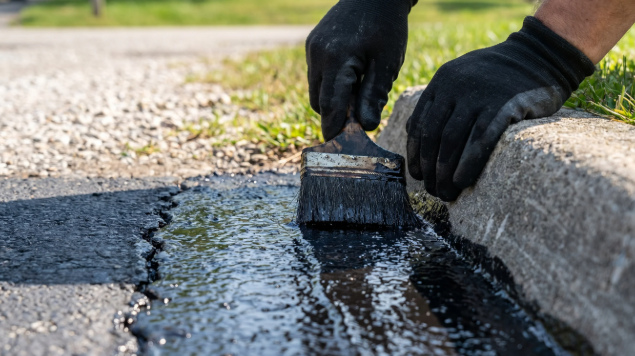
Sealer is a thin protective film rather than a resurfacing, and it only does its job when enough of it stays put. Spread in one fast pass across a hot driveway, it can end up thinner than a sheet of paper over the high spots where tires track every day. The version that turns up most often behind a faded driveway is exactly that, a single coat laid over a surface nobody scrubbed, thinned in the drum so the drum covers more square footage. Water finds the pinholes. Sun bleaches whatever film is left, and by the second summer the driveway can look worse than it did before anyone showed up with a hose.
See a;so: Convenient Nutrition for Busy Lifestyles
Five Questions Worth Asking Before You Sign
Bids on a 900 square foot two-car driveway around here tend to land between $250 and $500, and that spread is not random. The low end usually buys one coat and a quick pass with a leaf blower. The upper end should buy degreasing, crack filling and two separate coats, though nothing printed on the quote sheet will say so unless you make someone say it. So ask, out loud, before anybody unrolls equipment.
- How many coats are included, and is the second one priced separately? A good answer names two coats under one price.
- What cleaning happens before the sealer goes down, and does it include the oil stains? A good answer describes blowing, sweeping and spot degreasing, not just a leaf blower.
- Are cracks filled first, and above what width? A good answer gives a number, usually anything wider than a quarter inch.
- Is the sealer thinned, and by how much? A good answer quotes the manufacturer’s ratio and stays inside it.
- What is the warranty, and what voids it? A good answer is written on the invoice rather than spoken in the driveway.
Vague replies to any of those are themselves answers. A crew that cannot tell you how many coats it plans to apply has already told you the number is one. Write each response beside the dollar figure, and two quotes that looked identical stop looking identical.
Prep Work Decides How Long Sealer Holds
Cleaning is the boring half of the work and the half that decides everything, because sealer bonds to asphalt and not to the dust sitting on top of it. Oil spots need degreaser, loose stone needs to come off, and open cracks need filling before a drop of sealer lands on them. A May 2026 inspection guide from Hanson Paving advises homeowners to check for four problems first, since alligator cracking, gray fading, soft spots and pooling water all indicate structural damage that calls for repair or replacement rather than seal coating. Reading a driveway correctly before buying anything saves real money.
Carry one rule of thumb into the conversation. If the surface shows only hairline cracks and fading, sealer is the right purchase and a good one. If a screwdriver sinks into a soft patch, or a puddle is still sitting there two days after rain, no sealer on any truck will fix that, and a contractor who tells you otherwise is selling you a paint job.
A Second Coat Beats Paying For A Second Job
Two individual coats are the difference between a finish measured in seasons and one measured in years, because the second pass covers what the first left open and doubles the film that sun and water have to work through. How many driveways in this part of Tennessee get sealed twice inside eighteen months by two different crews? Nobody tracks that, and I have gone looking for the number more than once. What anyone can see is the math on one driveway: $280 spent in two consecutive summers buys less protection than $450 spent once on a crew that assessed the surface, cleaned it, and came back over it a second time. Whatever a search for sealcoating nashville tn turns up next spring, ask each bidder what happens after the first coat dries, and let that answer pick the winner.