Paying The Gap For A Tougher Shingle After Hail
Two hail claims in four years, on the same 1,900 square foot colonial. Both settlements were sized for the identical shingle that had already cracked twice, which is how a family pays twice for a roof that keeps failing the same way. The roofing companies simsbury ct homeowners call after a storm should be able to say, in dollars per square, what a tougher shingle costs above the amount insurance approved. That difference is the entire decision, and paying it once is usually cheaper than carrying a third deductible into the next decade.
Two Hail Repairs In Four Years Adds Up
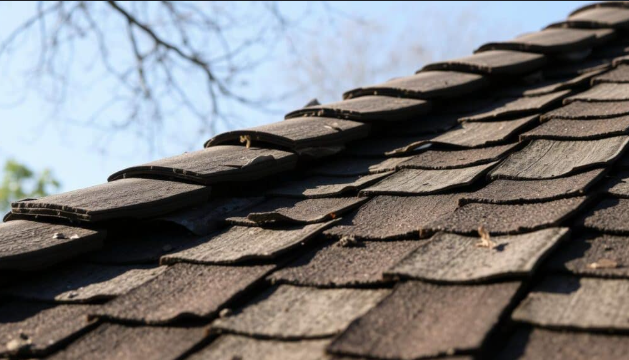
A repeat claim is never just the repair bill. Say the deductible sits at $2,500, which means two claims already cost $5,000 out of pocket before anyone mentions claim history at renewal. The case we see most often on these repeat roofs is heavy granule loss across the west and south facets while the north slope still looks new, because the storm cell tracked through on a line and hit only what it hit. Patching two facets restores the roof to the exact condition that failed in the first place.
Island Building Habits Travel To New England
Anyone who has strapped a roof down for hurricane season already thinks hard about wind uplift and what happens at the edges. Hail asks a different question. It is a fracture problem rather than a lift problem, and a mat that shrugs off 120 mile per hour gusts can still shatter under three quarters of an inch of falling ice. The instinct carries over even when the detail does not: build for the worst thing your climate actually does. In Connecticut that thing is ice arriving hard, several times a decade.
Impact Ratings Are A Lab Test, Not A Promise
Class 4 is the top impact rating under UL 2218, and a shingle earns it by surviving steel balls dropped onto a sample until the mat cracks. That test is repeatable and honest. It is also a laboratory, on a fresh sample, at room temperature, while real hail arrives at an angle onto a roof that has baked through six summers. So a Class 4 product buys better odds, not immunity. Homeowners comparing roofing companies simsbury ct neighbors recommend should ask what the rating covers and what it leaves out (the answer separates a salesperson from a roofer fast).
The Upgrade Gap Priced Out Per Square
Numbers make this concrete. Say the covered scope is 17 squares once the pitch and the garage are counted, and the insurer’s approved architectural shingle prices out at $410 per square, so $6,970 for the field. An impact-rated shingle over that same deck adds roughly $95 per square, which is $1,615 across the roof, plus about $340 for the heavier ridge and hip accessories the thicker profile needs. The gap comes to $1,955 all in. Those figures are an illustration rather than a quote, though the shape of the answer holds up: the upgrade is a few hundred to a couple thousand dollars, not a second roof.
If The Deck Is Sound, Upgrade Now
Here is the rule worth remembering. If the sheathing is dry and solid and the only failure is the shingle, pay the gap on this claim while the crew and the staging are already on site. If the deck feels soft anywhere, or the flashing has rusted through, that money belongs to sheathing and flashing first, because no rating helps a shingle fastened to bad wood. Ask your carrier directly whether an impact-rated roof earns a premium credit, since some offer one and the terms vary by state and by policy.
Scale is worth holding onto here. The Insurance Information Institute reported an average homeowners wind and hail claim of $14,747, with about 1 in 36 insured homes filing that kind of claim in a year, in figures current as of January 2026. Measured against a claim that size, a $1,955 upgrade line is a rounding error. That 1 in 36 is not spread evenly either, and a house standing in a corridor that has already been hit twice is not drawing an average risk.
See also: Convenient Nutrition for Busy Lifestyles
Pay Once For The Roof That Stays
The takeaway is unglamorous. Get the damage documented facet by facet, then get the upgrade priced per square as its own line, so the choice is made with both numbers visible on the same page. A family that once tied an island roof down against hurricanes already understands the reasoning, and it is the same reasoning pointed at ice instead of wind. Pay the difference when the structure underneath is sound, and put the money into the deck when it is not. Either way, get the line in writing before the dumpster shows up in the driveway.